← All speakers

Bio, Work & Ideas

Audry Hsu

Conference affiliation: RunPod · 2026

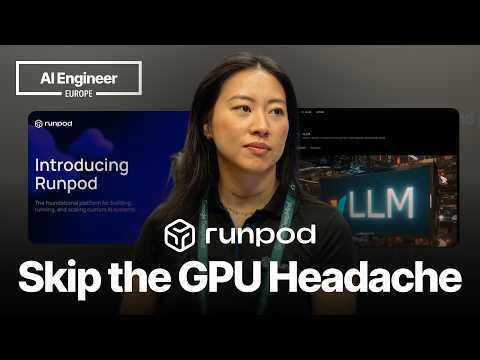
Audry Hsu is a software engineer at RunPod and a co-creator of Fána, an open-source feature-management platform. She builds tools that simplify difficult infrastructure decisions, from controlling software releases to running AI applications on cloud GPUs.

Before moving into full-stack engineering, Hsu worked at Deloitte as a senior consultant focused on regulatory and data management. She subsequently helped develop Fána with three other engineers, creating audience-targeted feature flags that enable selective releases and rollback without reversing entire deployments. Its architecture supports reusable audience rules, real-time updates, self-hosting and managed deployment; pre-evaluated responses and separate browser and server credentials help prevent sensitive targeting data from reaching client applications.

At RunPod, Hsu focuses on making GPU-backed AI development more accessible. Her work emphasizes practical choices developers must make about hardware availability, scaling, responsiveness and cost.

  • Remote GPU execution without leaving the IDE. RunPod Flash lets developers decorate asynchronous Python functions for execution on cloud GPUs while keeping application logic and debugging local. Hsu demonstrated switching between image-generation models optimized for speed and visual quality without repeatedly rebuilding containers or reprovisioning hardware.
  • Serverless inference with explicit tradeoffs. In a GPU-backed endpoint demonstration, Hsu configured H100 GPUs with A100 fallback, worker limits and always-active capacity. She distinguishes persistent environments for experimentation, autoscaling workers for variable demand and clusters for larger training workloads, emphasizing the relationship between cold starts, availability and cost.
  • Multi-model application orchestration. Hsu connected Qwen 3 for prompt generation, DreamShaper for image creation and Google’s Nano Banana 2 for composition. The pipeline illustrates how local Python can coordinate specialized models while moving computationally intensive steps onto remote infrastructure.

Read the topics behind these talks

2 conference talks

Key ideas

Scroll to read ↓

Audry Hsu demonstrates how RunPod Flash moves Python inference functions onto cloud GPUs, then extends image generation into a pipeline with prompt expansion and photo composition.

  • From model training to infrastructure work
    0:35 ↗
  • From spare GPUs to deployment options
    2:17 ↗
  • Keep the development loop local
    5:43 ↗
  • Send an image request through the local server
    7:42 ↗
  • Configure workers, correct the prompt, swap the model
    11:14 ↗
  • Add prompt generation and photo composition
    14:34 ↗
  • Understand what stays running
    16:55 ↗
  • Inspect the generated and composed images
    18:40 ↗

Key ideas

Scroll to read ↓

Audry Hsu walks through deploying Qwen from a vLLM Hub listing, configuring worker capacity, and separating cold-start queue delay from inference execution.

  • Who manages the GPUs?
    0:27 ↗
  • A platform shaped by GPU users
    2:19 ↗
  • Choose the compute environment
    4:12 ↗
  • Open the vLLM listing
    6:30 ↗
  • Configure Qwen, then create the endpoint
    8:28 ↗
  • Set worker capacity while initialization runs
    9:25 ↗
  • Follow a request from the queue to completion
    10:27 ↗
  • From a Hub listing to remote Python functions
    12:22 ↗

References