 ▶ Watch ↗
53:17

Conference affiliation: DevX and Tech Creator · OpenAI · 2026
Cova Lee is a video creator whose work combines visual design, music and custom editing tools. After building a full-time practice making short videos for Instagram, YouTube Shorts and TikTok, she joined OpenAI’s developer experience team. Her 2026 speaker profile credits her with an audience of 500,000 across platforms and collaborations with Adobe, DeepMind, Meta and Notion.
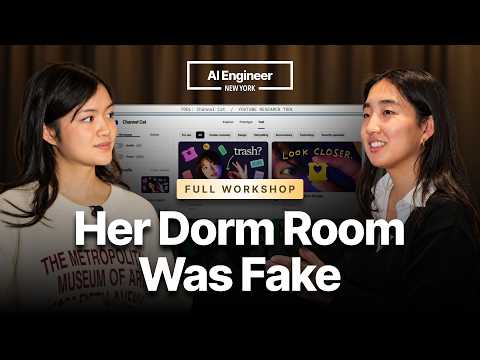
Cova’s early creative breakthrough came from her graduate-school dorm room. Using Photoshop’s generative fill, she transformed blank walls into a backdrop with lights, shelves, a window and a robot. She selected areas of the image, described what she wanted and chose among generated alternatives. She credits those experiments with helping her establish herself as a full-time creator: an ordinary room could become the setting for a much more elaborate visual idea.
In her workshop with Sarah Chieng, Cova explained why she often prefers an editable timeline to an automatically rendered video. Access to individual clips, titles, music and effects lets her keep adjusting the story. A rendered output can be convenient, but revising it may require another prompt and another render.
Her custom sound-effects pad makes that preference concrete. Its nine buttons insert sounds such as clicks, shutters and whooshes into an editing track. Cova can use it herself or have an assistant operating her computer use the same controls, then return to change the result. The tool reduces the work of placing sounds while preserving her ability to choose and revise them.
She applies the same approach to recurring editing tasks, maintaining instructions for operating Premiere and updating them as she finds inefficiencies. Those instructions cover steps such as sound effects, color grading and captions, allowing an assistant to identify unfinished work without requiring her to reconstruct the process each time.
Cova uses existing work to make creative direction specific, and builds tools to test choices before committing to a shoot:
Her move into developer experience connected this creative practice with user education and product feedback. At OpenAI, she described creating content, talking with users, relaying feedback and helping address bugs. Her personal videos also formed part of that work, reaching people beginning to build with software beyond traditional programming roles.
Cova argues that a distinctive point of view needs experiences beyond the internet. Deliberately choosing what to do, noticing what draws her attention and developing interests outside technology supply material that references alone cannot provide. Her ambition to broaden who can become a developer follows that emphasis on personal agency: more people should be able to turn their own ideas into things they can make.
▶ Watch ↗53:17
Loading more talks and highlights…