← All speakers

Bio, Work & Ideas

Ido Salomon

Conference affiliation: Co-Creator · MCP Apps · 2026

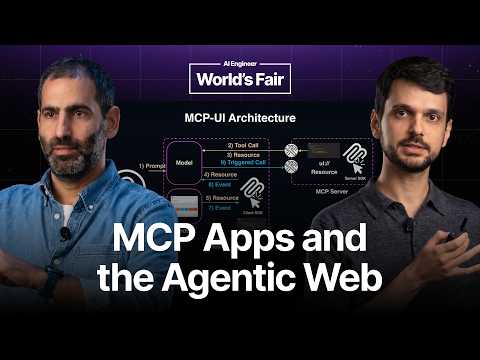
Ido Salomon created MCP-UI and AgentCraft and co-created MCP Apps, an open standard for embedding interactive applications inside AI assistants. His projects confront complementary problems: assistants reduce sophisticated applications to walls of text, while coordinating multiple coding agents can demand more attention than developers have available.

Previously chief architect at Talon Cyber Security, Salomon helped develop its enterprise browser before leading end-user AI as an architect at Palo Alto Networks. He subsequently joined monday.com, describing his work there as an AI lead in the chief executive’s office.

In 2023, he introduced AgentLLM, an experiment in browser-native autonomous agents designed around privacy and security. WebextLLM explored incorporating language models into browser extensions; GitMCP, which he co-created, connects coding assistants to GitHub repositories and documentation to reduce fabricated APIs and other coding hallucinations.

Salomon introduced MCP-UI in May 2025, enabling services to deliver their own interactive interfaces through the Model Context Protocol. Working with Liad Yosef and the wider MCP community, he helped develop that approach into MCP Apps, introduced as an official protocol extension in January 2026.

  • Applications should retain their identity inside assistants. A product-analytics service can display its own interactive funnel instead of returning explanatory text. Sandboxed application views communicate through the assistant host, preserving conversational context while allowing specialized services to contribute their established interfaces.
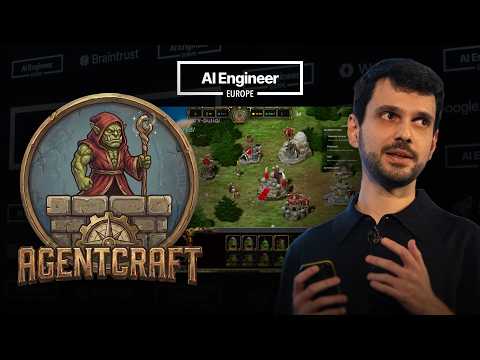
  • Agent orchestration is an attention problem. AgentCraft applies real-time strategy mechanics to coding agents, representing sessions as units and mapping repositories onto explorable terrain. Developers can trace file changes, detect overlapping work, respond to approval requests, and coordinate tools including Cursor, Claude Code, and Codex.
  • Autonomy should concentrate human effort on judgment. AgentCraft extends its visual interface with agent-generated tasks, isolated execution, screenshot-supported reviews, and shared workspaces. Developers and designers can follow one another’s agents, hand off unfinished work, and focus their attention on planning and evaluating results.

Read the topics behind these talks

3 conference talks

Key ideas

Scroll to read ↓

AgentCraft turns coding sessions into RTS-style units, then builds from visibility and fast intervention toward autonomous campaigns, evidence-based review, and shared workspaces.

  • Spawning agents is the easy part
    0:30 ↗
  • A game unit is a live coding session
    2:01 ↗
  • See where the work is happening
    3:34 ↗
  • Faster reactions still consume attention
    4:44 ↗
  • Delegate task discovery and supervision
    5:34 ↗
  • From supplying ideas to reviewing implementations
    6:42 ↗
  • Share the workspace with people and their agents
    7:43 ↗
  • Skills for directing the work
    9:24 ↗

Key ideas

Scroll to read ↓

MCP Apps lets services deliver recognizable interfaces inside an assistant, while the host coordinates interactions, tool calls, and the wider user journey.

  • Why should a service become a wall of text?
    0:18 ↗
  • From MCP-UI to a shared extension
    2:22 ↗
  • Deliver HTML, then let the host coordinate actions
    4:58 ↗
  • From funnel status to a clickable explanation
    6:35 ↗
  • The resource and callback loop
    8:46 ↗
  • Compose the task from pieces of services
    10:14 ↗
  • The host owns the wider journey
    12:25 ↗
  • Keep expensive views alive and let the host operate them
    14:16 ↗
  • One protocol across different ways of building UI
    15:29 ↗
  • An application distribution channel
    17:01 ↗

Key ideas

Scroll to read ↓

MCP Apps lets assistants present familiar interfaces, route interactions through the host, and compose services without reducing every tool result to text.

  • What disappears when a tool returns only text?
    0:46 ↗
  • From MCP-UI to MCP Apps
    2:04 ↗
  • A playlist needs both a view and an action path
    5:14 ↗
  • From a funnel report to interactive exploration
    6:48 ↗
  • The bidirectional implementation flow
    8:54 ↗
  • Compose the anniversary, not the websites
    10:23 ↗
  • How much control does the UI retain?
    12:34 ↗
  • Keeping up with the spec—and keeping views alive
    14:09 ↗
  • Predefined, declarative, or generated
    16:27 ↗
  • Assistants as an application distribution channel
    18:33 ↗
  • Build an app, integrate a host, or shape the standard
    19:15 ↗
  • Rethink the core application experience
    20:55 ↗

References