Luke Alvoeiro is a technical and product lead at Factory and the creator of Goose, the open-source coding agent he began developing at Block. He builds autonomous software-engineering systems around a specific constraint: capable models cannot finish ambitious projects reliably if every decision, code change, and test still demands human attention.
Alvoeiro attended Middlebury College and spent three and a half years at Block, helping shape its AI developer strategy and initiating Goose, which enables agents to execute, edit, and test software. He subsequently joined Factory, where he leads development of the core agent harness and works on Factory Missions, a system for coordinating extended engineering projects.
How he makes agent autonomy dependable
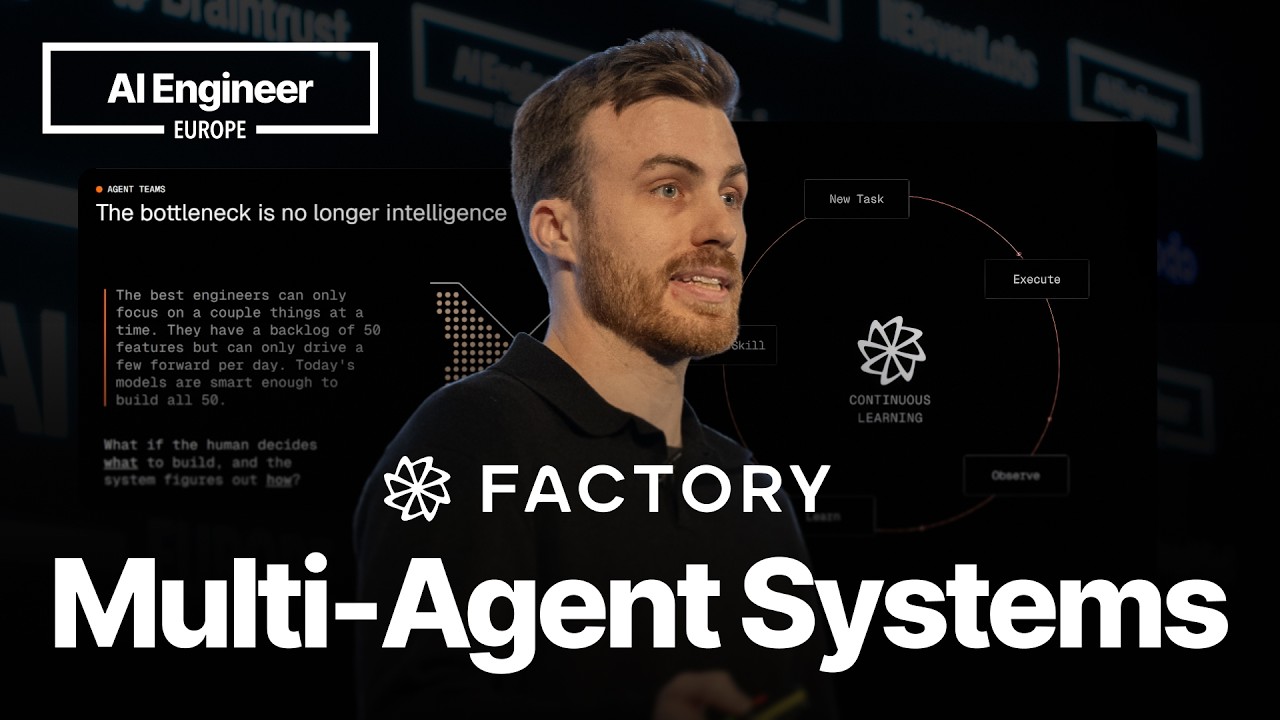
- Human attention as the bottleneck. Alvoeiro wants engineers to set objectives and architectural direction while agents execute asynchronously. Mission Control surfaces progress, worker activity, validation results, and spending without requiring constant oversight.
- Independent validation before and after implementation. Missions begins with validation contracts that define expected behavior before coding starts. An orchestrator plans milestones; fresh-context workers implement features; separate validators inspect code and operate applications through complete user workflows. Failures generate corrective assignments, preventing agents from treating tests shaped by their own mistaken assumptions as proof of success.
- Selective parallelism. Alvoeiro sequences agents that modify the same codebase, avoiding conflicting edits and inconsistent architectural decisions, while parallelizing read-only research and code review. Git commits and structured handoffs preserve completed work, unresolved issues, and execution results between sessions.
- Role-specific model selection. Planning, implementation, and verification require different capabilities, so Factory’s Missions architecture can assign each responsibility to a different model or provider. Alvoeiro keeps orchestration adaptable through prompts, reusable skills, and conventions such as AGENTS.md, with deterministic controls enforcing validation and project continuity.
His progression from Goose to Factory Missions expands the challenge from making one coding agent productive to making multiple agents accountable for finished, working software.

 ▶ Watch ↗