 ▶ Watch ↗
14:44

Conference affiliation: Staff Product Manager · Bumble · 2026
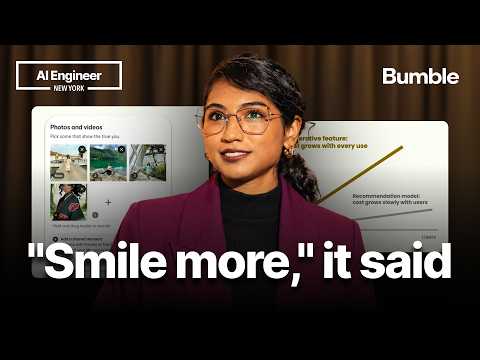
Supriya Subudhi is a product manager whose work at Bumble exposed a gap between winning an AI experiment and having a feature worth scaling. Working with the team behind Profile Guidance and AI Photo Feedback, she confronted three different results: people said they wanted advice, relatively few used it, and advice that prompted profile edits could still be wrong.
Supriya worked as a software and data engineer at Microsoft before studying for an MBA at the Indian School of Business from 2018 to 2019. Her product career subsequently included advertising technology and fintech, including PayPal, before she joined Bumble in London. Her professional history spans both engineering and responsibility for consumer products; she was credited as a staff product manager at Bumble in the 2026 AI Engineer NYC roster.
At Bumble, her team addressed a specific problem: members could assemble a dating profile without knowing whether it represented them well. Profile Guidance offers feedback on written bios and prompts, while AI Photo Feedback suggests improvements to photo selections. Bumble announced the features in February 2026, with written guidance rolling out globally and photo feedback available in the United States.
In her account of building AI photo feedback, Supriya describes how encouraging research and positive experimental results left important product decisions unresolved. The experience changed what she expected an A/B test to establish: measured user benefit still needed to survive scrutiny of the advice, its delivery and its cost.
Supriya continues to advocate randomized experiments. Her changed position concerns the launch decision: a positive result must hold for the advice people receive, the model the company can afford and the markets where the feature can be offered.
▶ Watch ↗14:44
Loading more talks and highlights…