← All speakers

Bio, Work & Ideas

swyx

Conference affiliation: AI Engineer · 2026

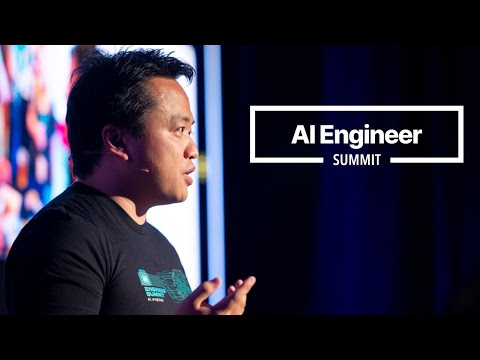
Shawn “swyx” Wang is the co-founder and chief executive of AI Engineer, co-founder and editor of Latent Space, and founder of Smol AI. His 2023 essay The Rise of the AI Engineer articulated an emerging profession devoted to turning foundation models into useful products; his conferences, podcast, newsletter, and software experiments subsequently gave that profession a community and a practical vocabulary.

Wang grew up in Singapore and worked in currency-options trading and hedge-fund analysis before joining financial-technology company Sentieo in 2016. He began studying programming in 2017, attended Fullstack Academy, and became a frontend engineer at Two Sigma. Roles at Netlify, Amazon Web Services, Temporal, and Airbyte followed, moving him from software development into developer experience and advocacy. His account of a decade of career changes traces the progression from finance to developer tools, independent publishing, and AI.

His 2018 essay Learn In Public urged developers to publish their notes, teach what they discover, and invite correction as they learn. He applied those principles to writing about React, JavaScript, TypeScript, and serverless computing; helped start Svelte Society; and wrote The Coding Career Handbook, now free and open source.

Wang started Latent Space in 2022 and launched its podcast with Alessio Fanelli the following year. His June 2023 AI-engineering essay announced the first AI Engineer Summit, organized with co-founder Benjamin Dunphy. At that gathering, he distinguished three emerging roles: engineers using AI, engineers building AI products, and AI systems performing engineering work. By 2024, his conception of the field encompassed retrieval, code generation, agents, multimodality, open models, evaluation, and the organizational challenges of deploying them together.

He also advises Cognition and has worked on coding-agent evaluation and codebase understanding. In 2026, he helped expand Latent Space into AI for science, extending its coverage beyond software into scientific research.

  • AI engineering is a distinct professional craft. Wang argues that useful AI products demand capabilities beyond prompting or model training: evaluation, retrieval, orchestration, context management, system design, and attention to actual user needs. His 2023 summit keynote positioned the profession between conventional software engineering and machine-learning research without treating either boundary as fixed.
  • Judge agents by useful output, not labels. In his framework for AI-intensive applications, Wang measures systems by valuable machine output relative to human effort. His SPADE framework groups recurring work into synchronization, planning, analysis, delivery, and evaluation, shifting attention from arguments about whether a workflow qualifies as an agent to whether it produces results.
  • AI News treats curation as an engineering problem. Through Smol AI and AI News, Wang combines automated collection and summarization with editorial filtering to help practitioners follow technical developments. The goal is selective, useful information, including the willingness to say when little deserves attention.
  • Agents for everything else can amplify an entire team. Wang uses AI Engineer as a laboratory for agents that translate Figma designs into websites, maintain conference schedules as code, synchronize speaker data, and research purchases. His account of agent-assisted conference operations identifies the organizational payoff: designers and other non-engineers can act without waiting for a developer. That experience also underpins his emphasis on agent-oriented interfaces: APIs, command-line tools, and Model Context Protocol integrations that make software accessible to automated systems.
  • No more slop means accountability for outcomes. Wang defines slop by low quality, inaccuracy, and inauthenticity, whether generated by people or machines. His case for higher standards in AI-assisted work emphasizes modular software, codebase understanding, careful curation, and clear human oversight; token consumption, lines of code, and uninterrupted agent runtime are inadequate substitutes for worthwhile results.

More recently, Wang has explored simulation and synthetic human feedback as potential ingredients in automated research and AI development.

Read the topics behind these talks

11 conference talks

Key ideas

Scroll to read ↓

AI engineering needs useful categories, but its durable foundations lie in human constraints, changing model capabilities, and turning those capabilities into tools people can use.

  • A piece of paper determines whether you can cross
    0:00 ↗
  • What does an AI engineer do?
    1:11 ↗
  • As the field matures, its concerns multiply
    2:47 ↗
  • Tracks are invented; constraints are discovered
    4:29 ↗
  • Engineering connects constraints to human benefit
    5:49 ↗
  • Human rates and temporary technology baselines
    6:58 ↗
  • Plan for better context use and cheaper intelligence
    7:56 ↗
  • Utility needs its own dimension
    8:48 ↗
  • From an untamable monster to mass transit
    9:16 ↗

Key ideas

Scroll to read ↓

Greg Brockman traces the work of AI engineering from making an idea usable to building research systems, coding agents, recoverable workflows, and responsible domain applications.

  • Making an idea work in the world
    0:58 ↗
  • Finding people to build with
    3:01 ↗
  • Separating real constraints from waiting
    4:58 ↗
  • Independent study that compounds
    7:59 ↗
  • Learning AI through people and hardware
    10:17 ↗
  • Learning rules instead of writing them all
    11:56 ↗
  • The idea needs an engineered system
    16:08 ↗
  • When an interface does not hide the risk
    18:43 ↗
  • Launch demand borrows from the future
    21:03 ↗
  • From a robust demo to a cloud coworker
    23:01 ↗
  • Make the repository easy to work in
    25:53 ↗
  • What the early adoption figures show
    28:38 ↗
  • Recovery must include the tools
    29:20 ↗
  • One fleet, very different workloads
    31:33 ↗
  • Algorithms become a bottleneck again
    35:20 ↗
  • Domain expertise remains part of the system
    37:44 ↗

Key ideas

Scroll to read ↓

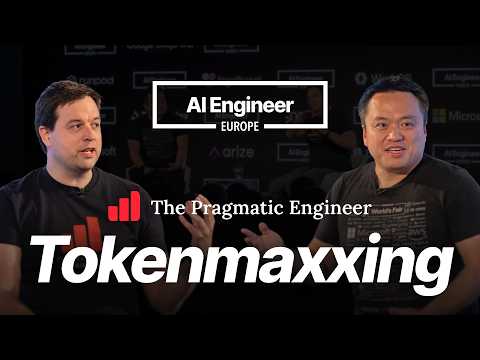
Token counts can reward busywork even as coding agents change who can build software, what engineers own, and where companies invest in infrastructure.

  • When AI usage becomes a performance proxy
    0:28 ↗
  • Why leaders pushed adoption
    4:48 ↗
  • Compliance versus useful output
    8:01 ↗
  • Choose the right unit of productivity
    9:26 ↗
  • Learning through changing workflows
    10:42 ↗
  • Broader responsibilities, smaller teams
    12:41 ↗
  • Orchestrating agents is not people management
    14:42 ↗
  • The infrastructure hidden behind product output
    17:25 ↗
  • Shopify’s deliberate cost of being early
    20:39 ↗
  • An unexpected publishing business
    22:51 ↗
  • Protecting the work without burning out
    24:51 ↗

Key ideas

Scroll to read ↓

Peter Steinberger explains how OpenClaw’s rapid growth exposes the operational realities of agent security, independent open-source governance, modular architecture, and engineering judgment.

  • Independent governance and maintainers from multiple companies are intended to keep OpenClaw open, model-agnostic, and less dependent on a single organization. 16:04 ↗ 19:40 ↗ 20:54 ↗
  • Security triage requires context: severity scores do not establish exploitability without considering gateway exposure, permissions, deployment configuration, and real-world usage. 6:27 ↗ 8:10 ↗ 13:11 ↗
  • Agent safety depends on boundaries: restrict who can issue instructions, sandbox shared agents, minimize accessible secrets, and treat model choice as part of the threat model. 10:50 ↗ 35:55 ↗ 36:54 ↗
  • Personal-agent architecture emphasizes user-controlled data, adaptable model selection, and interfaces that can follow users across messaging tools, rooms, and devices. 21:56 ↗ 23:03 ↗ 33:27 ↗ 34:46 ↗
  • Human judgment remains the bottleneck: iteration, taste, system design, and the ability to reject unnecessary features keep agent-generated software coherent and maintainable. 26:32 ↗ 27:48 ↗ 41:02 ↗ 42:14 ↗ 43:19 ↗

Key ideas

Scroll to read ↓

AI engineering combines better tools, software built around models, and increasingly capable agents—but its largest multiplier may be how engineers teach and organize one another.

Key ideas

Scroll to read ↓

Google DeepMind’s generative media team discusses how images, video, audio and language fit together—and why attractive outputs, human preference scores and real creative workflows can point toward different models.

  • References carry scene, voice and style information that users may struggle to express in language; instructions identify what should change and what should remain.
    4:59 ↗
  • Joint audiovisual generation models moving lips and audible speech as consequences of one event, addressing synchronization inside generation rather than repairing it afterward.
    25:20 ↗
  • Human preference can favor sharpness, saturation and flattering skin tones without establishing realism or task success. Expert judgment and instruction following help reveal and control those differences.
    34:43 ↗
  • Media evaluation combines objective checks, thousands of human-evaluated items, live experiments and feedback from real workflows; free-form editing makes coverage especially difficult.
    42:17 ↗
  • The useful missing data includes creative trajectories: revisions, selections and the reasons behind them. FDEs can help turn customer failures into improvements upstream in modeling.
    48:18 ↗

Key ideas

Scroll to read ↓

A guide to the expanded program, expo, research encounters, leadership sessions and side events—and how to make room for the conversations that recordings cannot replace.

  • What should you make time for?
    0:00 ↗
  • A larger buffet, with a refreshed program
    1:30 ↗
  • The expo can be the main event
    3:42 ↗
  • Finding research outside the recommendation feed
    5:45 ↗
  • Print the claim, then defend it
    8:13 ↗
  • A lounge for heavy token users
    9:21 ↗
  • Real workflows and private conversations
    10:54 ↗
  • From broad roles to application verticals
    12:05 ↗
  • Continue the conversation after the program
    13:41 ↗
  • An entry point for people arriving alone
    14:41 ↗
  • Relationships beyond work
    15:46 ↗
  • The work behind a useful gathering
    17:00 ↗

Key ideas

Scroll to read ↓

Running an AI conference with agents changes more than website development: it shortens design feedback loops, moves schedule management into code, and reshapes who uses software.

  • How does a tiny team run an AI conference?
    0:51 ↗
  • The website begins with a setup problem
    3:07 ↗
  • A shorter feedback loop changes what people attempt
    5:17 ↗
  • Make conference data something the agent can maintain
    7:57 ↗
  • Finding a lobster in London
    9:33 ↗
  • From planning notes to speaker research
    10:44 ↗
  • The people who inherit a replacement must trust it
    11:43 ↗
  • Build interfaces for the user that is arriving
    12:44 ↗

Key ideas

Scroll to read ↓

Cheap generation makes output abundant and judgment scarce. AI engineering needs curation, codebase understanding and accountability to keep that abundance useful.

  • How do you grow without losing taste?
    0:24 ↗
  • Judge the output, whoever produced it
    1:52 ↗
  • The same tools can produce very different work
    2:42 ↗
  • A promising category is not enough
    3:45 ↗
  • Generation gets cheaper; judgment still costs
    4:31 ↗
  • Use AI to improve the selection, then demand good code
    5:12 ↗
  • Match attention to the work
    6:25 ↗
  • Operate the application, manage the context
    7:08 ↗
  • Refuse the incentives that produce slop
    7:59 ↗

Key ideas

Scroll to read ↓

From conference feedback loops to AI News’s daily pipeline, reusable application patterns offer a more useful design vocabulary than arguing over what counts as an agent.

  • A conference that tracks its field
    0:22 ↗
  • A growing field does not require elaborate scaffolds
    2:54 ↗
  • What would a standard model of AI engineering explain?
    4:27 ↗
  • Architecture and lifecycle describe different concerns
    6:00 ↗
  • Agent definitions leave some useful applications unexplained
    7:34 ↗
  • Human input versus valuable AI output
    8:36 ↗
  • The repeated workflow behind AI News
    10:35 ↗
  • SPADE: from many inputs to one delivered result
    11:16 ↗
  • Adding intelligence people want to use
    12:05 ↗

Key ideas

Scroll to read ↓

As models improve and inference gets cheaper, AI engineering is moving toward a more specific deliverable: agents that do useful work for users.

  • What does an AI engineer build?
    0:34 ↗
  • From frameworks to production
    2:48 ↗
  • Reconsidering the year of agents
    4:18 ↗
  • Several definitions, no settled boundary
    5:20 ↗
  • Why agents may work now
    7:08 ↗
  • Cheaper intelligence, more operating options
    8:09 ↗
  • Useful delegation and unwanted delegation
    9:02 ↗
  • Adoption evidence and a growth forecast
    9:38 ↗
  • The AI engineer’s evolving deliverable
    10:56 ↗

References