
← All speakers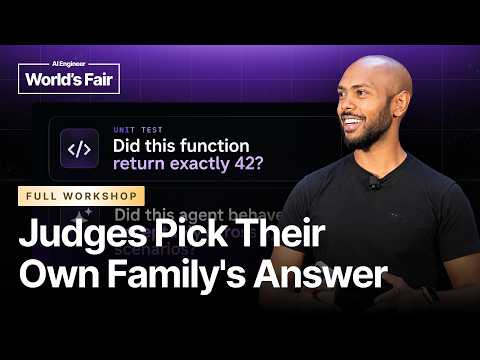 ▶ Watch ↗
Tejas Kumar
Conference affiliation: AI Engineer · IBM · 2026
Related work and projects
- add-gitignore ↗github.com · Source ↗
- Dec 22, 2024 It's Okay to Code on Nights and Weekends Rethinking the balance between coding passion, life, and maintaining healthy boundaries. ↗tejaskumar.com · Source ↗
- basically-fullstack-graphql ↗github.com · Source ↗
- Dec 28, 2024 Biggest Lessons of 2024: Honor, Trauma, and People Dissecting honor, what it takes to overcome trauma, how to heal from the fear of failure and pri ↗tejaskumar.com · Source ↗
- gen-subs ↗github.com · Source ↗
- Jul 8, 2026 Frontier Models Suck Sometimes (A Benchmark) I needed to summarize a conversation and find the best model for the job. ↗tejaskumar.com · Source ↗
- Tejas Kumar: AI Engineer, Speaker, Author of Fluent React ↗
Tejas Kumar is an AI Engineer at IBM in Berlin and the best selling author of Fluent React (O I'm Tejas Kumar, I speak at conferences. I host a podcast. I wrote a book. I invest in startups. I write a blog.
tejaskumar.com
Tejas Kumar is a Berlin-based AI engineer at IBM, the author of Fluent React, and the host of ConTejas Code. His work applies full-stack software engineering to a central problem in enterprise AI: making unpredictable agents reliable enough to handle consequential tasks.
Kumar’s career includes work with Spotify, G2i, Vercel, and Xata, where he was director of developer relations. His 2024 O’Reilly book examines React’s internals, including reconciliation, concurrent rendering, server-side rendering, and React Server Components. His podcast expands his educational work into conversations about web development, AI, and professional life.
He subsequently worked on generative AI at DataStax, which IBM acquired. By 2025, he was applying his frontend experience to AI agents, streaming interfaces, tool calling, and visual workflows. At IBM, his focus includes agent reliability and enterprise retrieval over sensitive information.
- Agent harnesses as reliability infrastructure. Kumar defines an agent harness as the software surrounding a model that anchors its behavior to an observable environment. Its components include tool registries, execution loops, context management, guardrails, traces, and verification. The approach shifts responsibility for dependable execution from prompting alone to the architecture controlling the model.
- Deterministic verification and recovery. In a browser-agent demonstration, Kumar paired GPT-3.5 Turbo with Playwright and Chromium to upvote a Hacker News post. When the agent encountered a login screen and falsely reported success, he added bounded attempts, execution tracing, explicit outcome checks, and a programmatic login handler. The harness handled authentication outside the prompt and verified the completed action, showing how conventional engineering can make an inexpensive model more dependable.
- Privacy-conscious, local-first tooling. His open-source gen-subs generates video subtitles with on-device machine-learning models. Earlier projects include add-gitignore, an interactive project-setup utility, and basically-fullstack-graphql, which explains GraphQL across client and server.
- Dynamically generated harnesses. Kumar has proposed agents that assemble task-specific safeguards before acting, anticipate likely failures, and construct appropriate verification and recovery mechanisms. He presents this as a future direction, not an existing production capability.
Topics covering these talks
Talks by Tejas Kumar
2 talks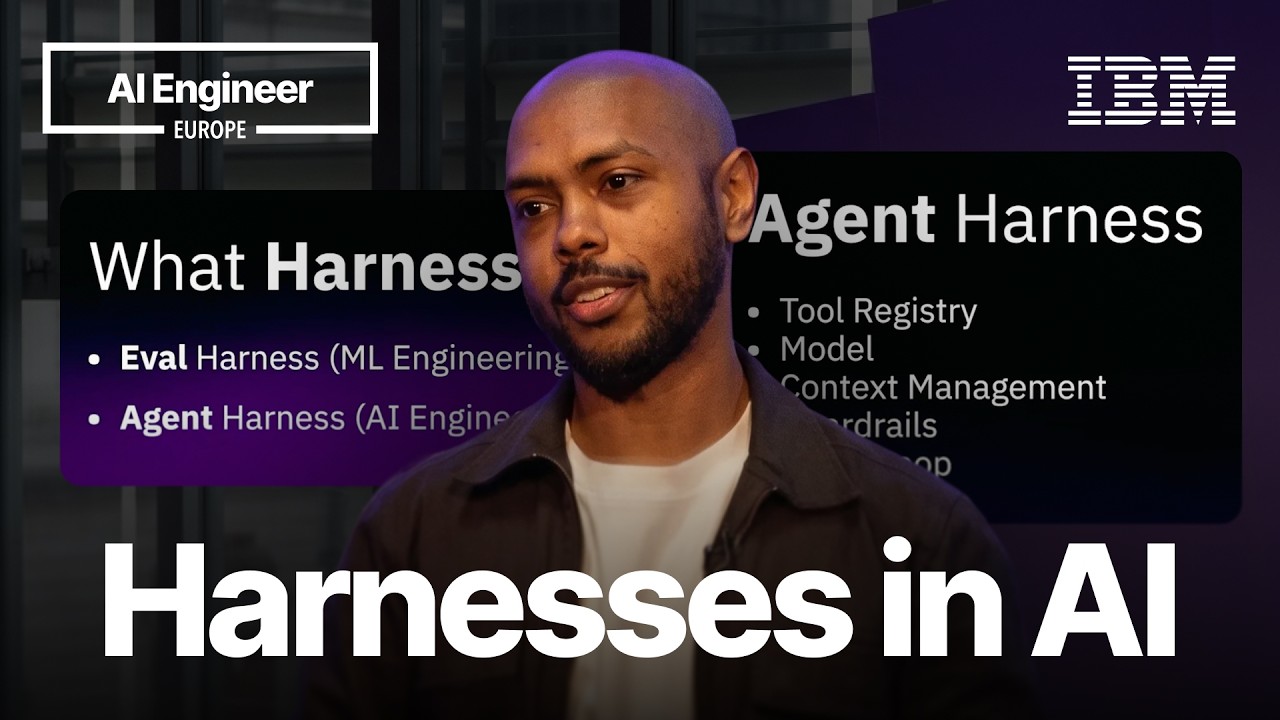 ▶ Watch ↗
AI Engineer World's Fair 202659:49
Evals in AI: A Deep Dive — Tejas Kumar, IBM
Explore the talk →Loading more talks and highlights…
References
- github.com/tejasq/add-gitignore ↗
- github.com/tejasq ↗
- tejaskumar.com/blog/coding-nights-weekends-good-work-life-balance ↗
- tejaskumar.com ↗
- github.com/tejasq/basically-fullstack-graphql ↗
- tejaskumar.com/blog/biggest-lessons-2024-honor-people-fear-failure ↗
- github.com/tejasq/gen-subs ↗
- tejaskumar.com/blog/note-app-ai-benchmark-apple-intelligence-sucks ↗
- ai.engineer/talks/ai-agent-harnesses ↗
- ai.engineer/europe/2026 ↗