
AI models, applications, and developer tools
OpenAI
OpenAI develops AI models and applications for consumers, developers, and organizations. ChatGPT supports conversational assistance, while ChatGPT Work carries out tasks across connected apps and files, producing spreadsheets, presentations, documents, and web apps. Users can review progress, steer work, and approve important actions. Codex helps developers build software and review pull requests; OpenAI’s APIs let developers build on its models. Together, these products span direct assistance, software development, and workflows involving multiple tools.
Founded as a nonprofit in 2015, OpenAI began with Sam Altman and Elon Musk as co-chairs, Greg Brockman as CTO, and Ilya Sutskever as research director. Altman is its current CEO. Its InstructGPT research applied reinforcement learning from human feedback to improve instruction following: human demonstrations and ranked model responses supplied training data, and a learned reward model guided further training. This approach addressed the gap between predicting text and responding to user intentions.
Following its completed 2025 recapitalization, the nonprofit OpenAI Foundation continues to control OpenAI Group PBC, its commercial public benefit corporation. In March 2026, OpenAI reported more than 900 million weekly active ChatGPT users and over 50 million subscribers. That month, it closed a funding round with $122 billion in committed capital at an $852 billion post-money valuation. By July 2026, the company reported more than 5 million weekly Codex users, including more than 1 million using it outside software development.
Explore the recordings
The supplied recording, Routing LLM Inference in Production: From Engine Signals to Policy, examines engine selection through the joint presentation of Lu Zhang and Qianru Lao. It connects cache reuse, heterogeneous GPU capacity, global routing policy, and production protection mechanisms. This guide covers that recording; the supplied evidence does not establish broader OpenAI archive coverage.
Engine selection affects both latency and reusable context
The inference load balancer runs in front-end CPU clusters, which prepare incoming requests for inference engines usually hosted in GPU clusters. A model can have engines distributed across regions, providing resilience against localized failures. Selecting among them requires considering time to first token (TTFT), time between output tokens (TBOT), health, utilization, and network distance. Serving architecture and signals
Cache locality adds a consequence beyond distributing current work: a follow-up conversation turn can reuse context already held in an engine’s KV cache, avoiding recomputation. Moving related requests between engines can sacrifice that benefit, so an apparently balanced traffic allocation can still undermine serving efficiency. KV-cache reuse
Feedback-generated weights can reverse their own improvements
Zhang describes an earlier design that filtered engines by eligibility—including capabilities, compute restrictions, and data residency—then selected among eligible destinations using weighted consistent hashing. A periodic controller smoothed engine signals into performance scores, compared those scores with the fleet average, and adjusted routing weights upward or downward. It borrowed the proportional component of PID control, rather than presenting a full PID controller. Eligibility, hashing, and weight generation
This approach combined multiple signals and helped redistribute less constrained requests when broadly eligible engines became busy. Its tradeoff was coupled behavior: explaining a particular weight or tuning one property without affecting others became difficult, especially across different GPU types. Removing traffic cooled an engine; the resulting improvement encouraged the controller to send traffic back. Repeated reversals produced oscillation that disrupted KV-cache utilization. Controller benefits and limitations Oscillation mechanism
Global coordination stays outside synchronous engine selection
Lao explains why neither round robin nor independent local choices provide sufficient coordination. Round robin ignores differences in capacity, hardware, health, and distance while scattering cache-related requests. Independently choosing a preferred engine from each CPU cluster can make several clusters converge on one destination, overloading it while other engines remain underused. Why local choices need coordination
The newer architecture gives a control plane a global view and lets each cluster’s data plane select engines from locally cached candidate lists and routing weights. Those snapshots refresh asynchronously, so request-time selection does not require a synchronous control-plane call. Live engine health and ready-replica signals also supply fast local guardrails. The control plane combines engine signals, network overhead, and offline regressions of capacity, TTFT, and TBOT to compute and publish subsequent weights. Control-plane and data-plane responsibilities
The distinction is between three paths: synchronous request-time selection and forwarding, asynchronous engine-signal collection, and asynchronous publication and pulling of routing weights. Global planning influences each request through installed local state, while immediate guardrails respond to changing engine conditions. Three system paths
Optimize network travel and engine-side delay together
Nearest-engine routing can fail when regional demand exceeds nearby GPU capacity. Sending some traffic farther adds network latency but can avoid a larger engine-side wait, provided the receiving engine has sufficient spare capacity. The recording’s illustrative example supports this comparison, without establishing a measured latency saving; its transcript and description disagree on the farther engine’s numerical capacity. Geographic demand and capacity
The optimizer takes demand from each CPU cluster, network latency to each engine, available engine capacity and health, and load-dependent TTFT and TBOT profiles. It outputs weights representing the fraction of each cluster’s traffic allocated to each engine. Its stated objective minimizes expected end-to-end latency across routed traffic, including both network and engine-side latency, subject to routing all demand, respecting effective capacity, and keeping weights non-negative. Optimizer inputs, objective, and constraints
The presentation makes these policy choices explicit but does not specify the solver or how cache affinity enters the newer optimization. Cache locality remains a stated routing concern; the described objective does not demonstrate a separate cache-affinity term. Scope of the described optimization
Protect against unhealthy engines, retry amplification, and excess demand
Zhang closes with controls addressing separate sources of production pressure. Outlier penalties reduce an anomalous engine’s routing weight, allowing transient recovery or operator intervention. Retry budgets cap additional attempts because failures under heavy utilization can trigger retries that increase load and cause still more failures. Those budgets must become more restrictive as utilization rises. Outlier penalties and retry storms
Load shedding is the last resort when serving capacity cannot meet demand: proactively rejecting a portion of traffic allows graceful degradation. This also clarifies the practical boundary of the optimizer’s requirement to route all demand within capacity. Routing redistributes available work, penalties reduce exposure to unhealthy engines, retry budgets constrain amplification, and shedding reduces the work the fleet attempts when total capacity is insufficient. Dynamic budgets and load shedding
24 talks
Newest first

From fork() to Fleet: Designing an Agent Sandbox Cloud — Abhishek Bhardwaj, OpenAI
AI Engineer World's Fair 2026 · 44:34

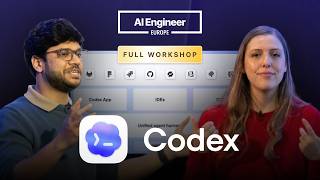
Full Workshop: Setting Yourself Up for Success — Jason Liu, OpenAI Codex
AI Engineer World's Fair 2026 · 1:15:02

The Golden Age of AI Engineering
Alexander Embiricos · Romain Huet · Peter Steinberger
AI Engineer World's Fair 2026 · 25:13


Harness Engineering: How to Build Software When Humans Steer, Agents Execute
AI Engineer Europe 2026 · 46:21


Model-Maxxing: RFT, DPO, SFT (Fine-tuning with OpenAI) — Ilan Bigio, OpenAI
AI Engineer World's Fair 2025 · 1:46:15


Your realtime AI is ngmi — Sean DuBois (OpenAI), Kwindla Hultman Kramer (Daily)
Sean DuBois · Kwindla Hultman Kramer · Yaxin
AI Engineer World's Fair 2025 · 16:30



From Text to Vision to Voice: Exploring Multimodality with OpenAI
AI Engineer World's Fair 2024 · 23:39



28 speakers at AIE
Affiliations reflect their AIE appearances, not necessarily current employment.
 Will HangMachine-learning engineerCathy ZhouAI engineerAnoop KothaToki Sherbakov
 Dominik KundelDeveloper Experience Lead
 Vaibhav SrivastavKatia Gil GuzmanDeveloper-experience engineerKarina NguyenFounder of Thoughtful
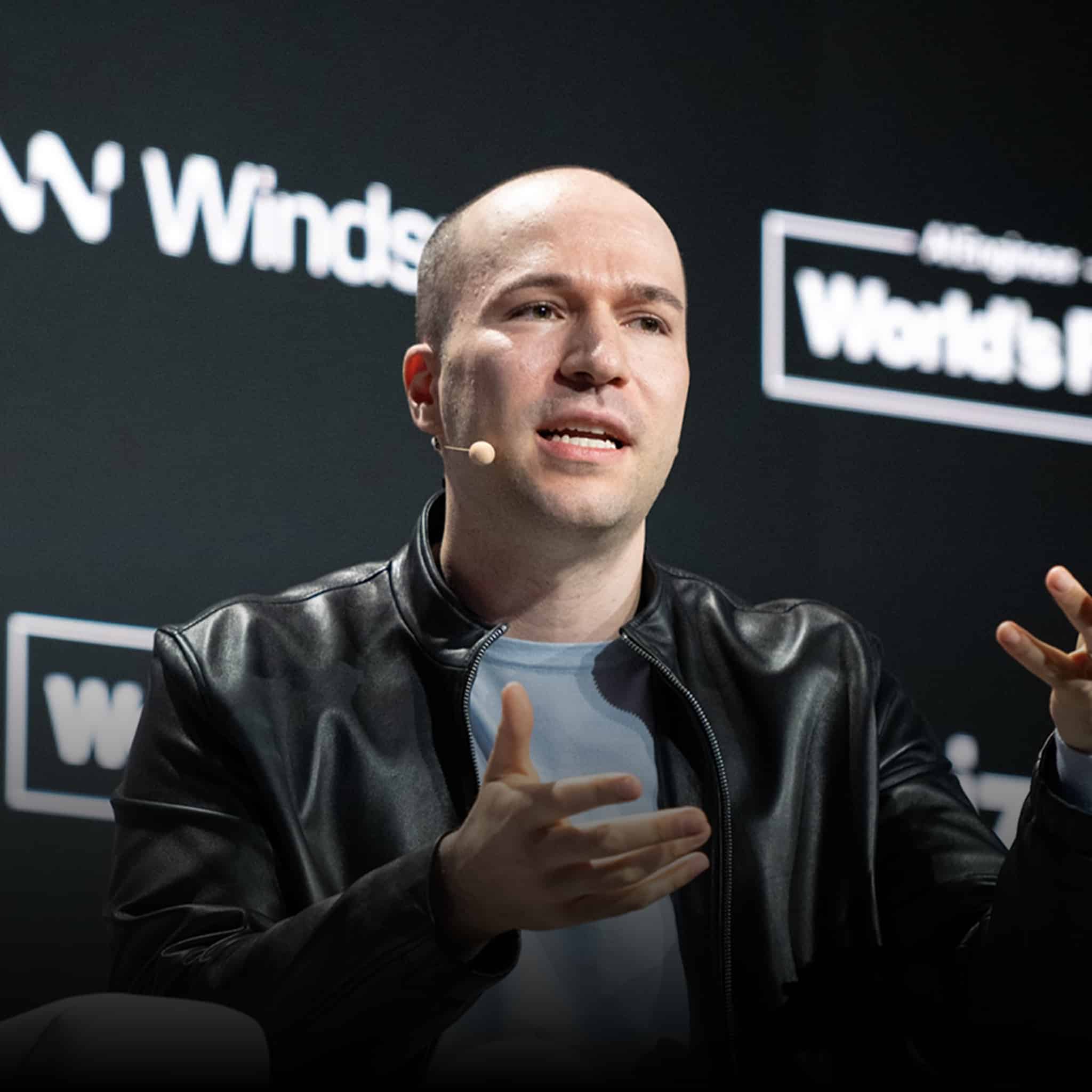 Greg Brockman
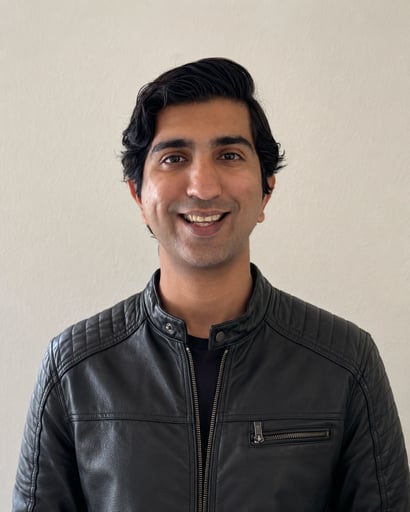 Abhishek BhardwajMember of Technical Staff, RL & Agent Infrastructure
 Romain HuetHead of Developer Experience
 Jason LiuDeveloper Experience, OpenAIIlan Bigio
 Bill ChenApplied AI engineer and former founder of RiskAngle
 Brian FiocaOpenAI engineer
 Ryan LopopoloMember of Technical StaffPrashant MitalStartup solutions architect
 Fouad MatinOpenAI security engineer and the co-founder and former chief executive of Indent
 Logan KilpatrickProduct lead for Google AI Studio and the Gemini APISimón FishmanSean GroveFounder and chief executive of Linzumi
 Peter SteinbergerOpenClaw
 Alexander EmbiricosHead of Enterprise Product
 Vinoth GovindarajanMember of Technical StaffSean DuBoisMember of the technical staff
 Charlie GuoDeveloper experience engineerQianru LaoMember of Technical Staff on the Inference teamLu Zhang